New results (30/06/2026)
Teams LNAR-LHyS"The Usefulness of the Useless". This phrase, coined by Japanese researcher Susumu Kitagawa, describes his own creation: porous coordination polymers (PCPs). More commonly known as Metal-Organic Frameworks (MOFs), these materials combine organic and inorganic chemistry, two worlds that typically do not mix. MOFs are crystalline hybrids with extraordinarily high specific surface area pores and remarkable chemical properties. This duality makes them the Swiss Army knives of science, capable of everything: capturing gases, storing energy, purifying solutions, enhancing catalysis, or excelling in the medical field.
The problem? In their raw state, the synthesis of a MOF yields a powder, unsuitable for industrial-scale use. Hence, probably, Kitagawa's term "useless." To address this, techniques like pressing or extrusion have been tested. However, these methods result in the loss of the initial properties of the MOFs. This is precisely where a thesis project at the LHyS laboratory, led by Ervin Prozsa and directed by Michaël Carboni, Arnaud Poulesquen, Vanessa Proust, and Jérémy Audevard, comes into play.
The goal of this research? To meet the challenge of designing a shaping method that is both simple, accessible, and effective. Two distinct strategies are currently being explored.
The first relies on the High Internal Phase Emulsion (HIPE) method, and more specifically, Pickering emulsion. The secret lies in the stabilization of an emulsion using solid particles that agglomerate at the water-oil boundary to form a solid monolith. Whether it is a water-in-oil or oil-in-water emulsion, the stability depends on the chosen particles. The incorporation of additives, such as polymers (Poly-HIPE) or silicas (Si-HIPE), then gives the monolith greater robustness.
The second approach focuses on forced cohabitation: directly growing MOFs on the surface of geopolymers. A geopolymer is a meso- and/or macroporous aluminosilicate with interesting adsorption and separation properties. A green synthesis protocol now allows the entire surface of the geopolymer to be coated with MOF crystals, all at low temperature and without agitation.
In the end, these two methods result in a hybrid solid with hierarchical porosity (from macro- to micropores). The virtues of solid supports and MOFs finally merge, without clogging or altering their host.
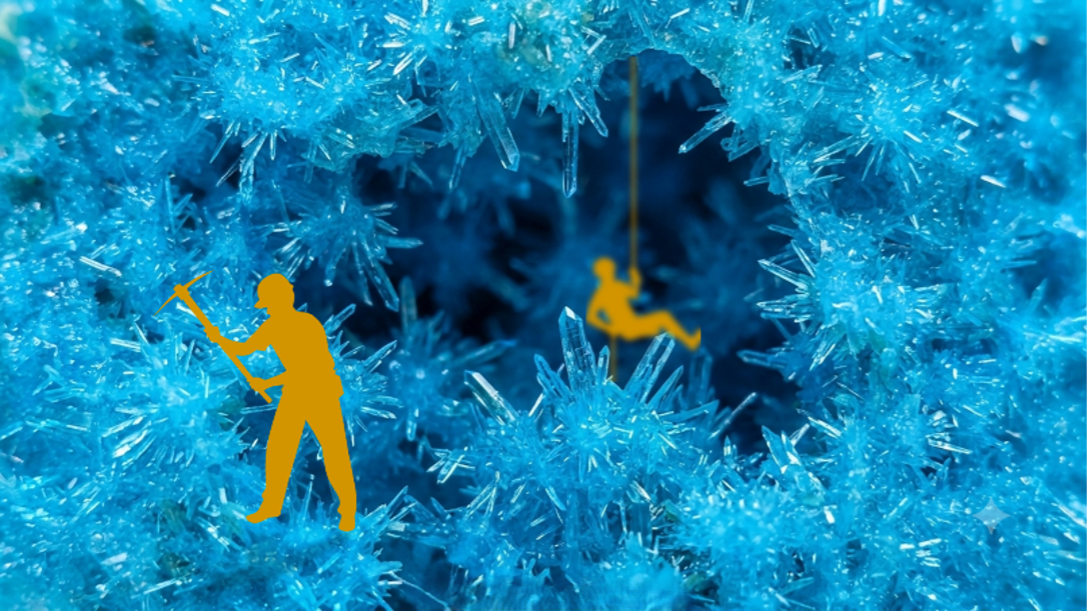
Figure: Dendritic Growth of MOF on a Geopolymer
Credit: ICSM
This work has been the subject of:
E. Prozsa, S. Medjouel, J. Audevard, V. Proust, A. Poulesquen, M. Carboni. Macro- and microporous interfaces: Direct MOF growth on geopolymer surfaces. Mater. Today Commun. 52 (2026) 115195. DOI: 10.1016/j.mtcomm.2026.115195
Contacts: Vanessa PROUST, Michaël CARBONI